household CUDA workloads
Object detection on Home-Assistant with Unifi Protect cameras and Deepstack
why
Ubiquiti’s 3rd generation security camera system is pretty neat. I’d call it prosumer grade gear. They’re moving their product portfolio towards a 4th generation, which has camera based object detection, but these, higher resolution/HDR cameras are crazy expensive.
I like to run household mission critical workloads on dedicated equipment and add value by integrating those workloads with a unified building management system (BIM) that simplifies the user experience and centralise and aggregates the data created by these Internet of Things (IoT) systems.
not all nVidia GPU accelerators accelerate
Why Kubernetes? And what has Kubernetes to do with GPUs?
So if you’ve been following along, in my intro to Mini series, part 2 you will remember both the mighty DL580 and its four smaller siblings all have ample capacity for installing large interface cards. Notably, the four HPE SL250 servers in the shared power chassis are intended to house either and additional non-hot-swap 4x 2.5” disk drives, or up to 3x doublewide PCIe x16 accelerator cards.
regaining your tech sovereignty
Many words are being intentionally debased of late. Sovereignty is certainly one of them. It is not a term created by those who want to lord over others. Quite the contrary, especially when used to express self-ownership.
Self-ownership, also known as sovereignty of the individual or individual sovereignty, is the concept of property in one’s own person, expressed as the moral or natural right of a person to have bodily integrity and be the exclusive controller of one’s own body and life.https://en.wikipedia.org/wiki/Self-ownership
our Mini computer
Part 5 of 5 - follows on from; Part 4 - not a fifth wheel
our home server solution Mini
provides for a resilient, performant pool of processing units and persistent storage to run ‘household’ apps.
In total there are 108 CPU cores and (currently) 960GB of RAM. This pool of CPUs and memory is supported by a 40TB raw SSD, and 48TB usable spinning rust.
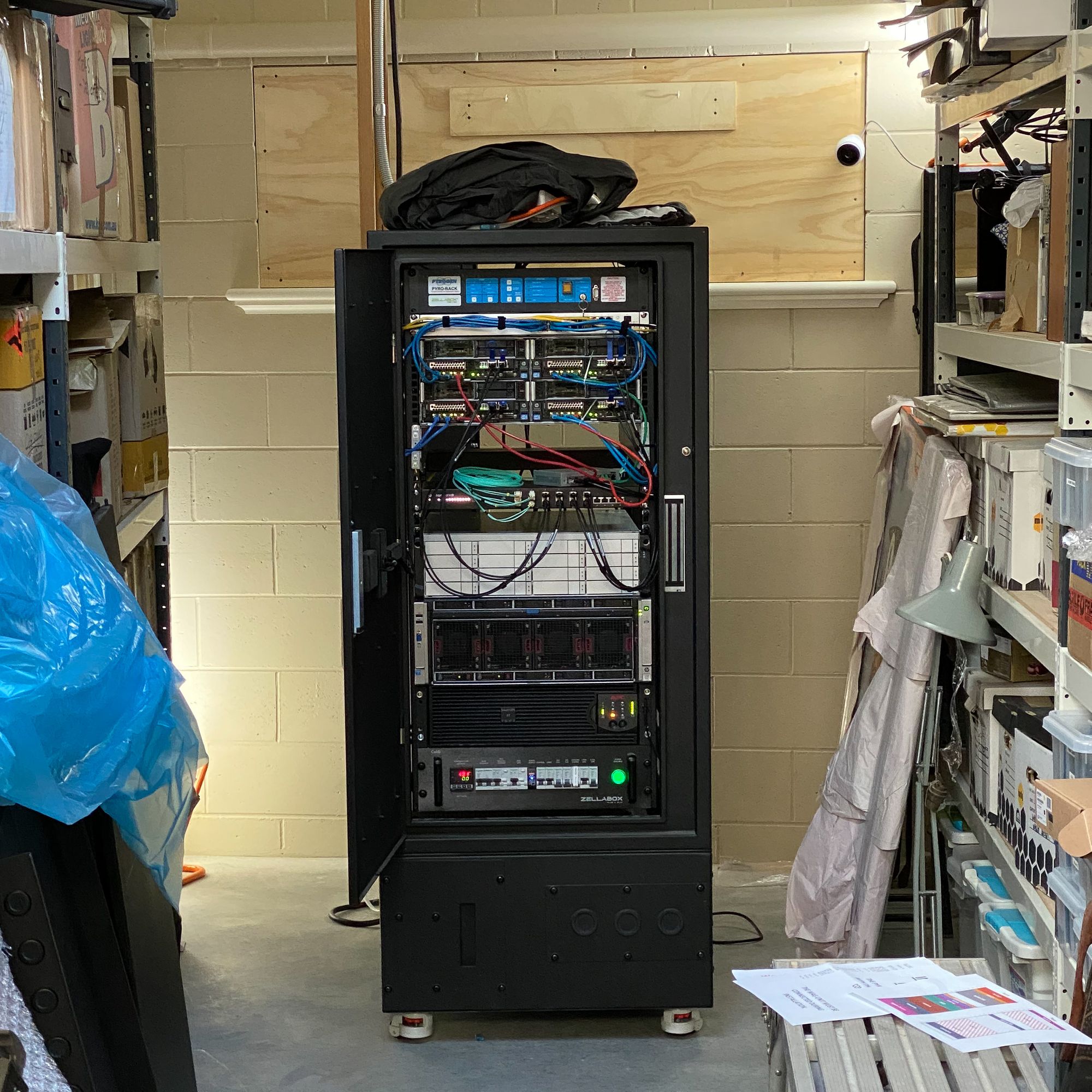
Mini is a hyper-converged infrastructure utilising the Ceph storage system to pool the SSDs install in each server node, enabling virtual pools of storage available to all virtual machines running on any node in the cluster. Depending on the specific Ceph pool types deployed concurrently on the same set of SSDs, different redundancies can be mixed. The configured
rbdblock device pool for example, which provides virtual ‘whole disks’ for a VM to itself manage the filesystem therein, is using a 3-way mirror type of redundancy. So for every block of data stored there are two additional copies stored in the pool. This why I quote the net SSD size as a raw 40TB. If I only used the Ceph storage for thisrbdpool, with 3-way mirroring, 13.3TB would be usable.The same set of disks is also housing thecephfspool which provides a shared filesystem, not unlike NFS. This pool is using a RAID5 style parity structure, less resilient and performant than the 3-way mirror structure, but much more efficient, space-wise.Both of these pools simultaneously share the exact same disks. Ceph is awesome.
not a fifth wheel
Part 4 of 5 - follows on from; Part 3 - converged cluster
The fifth server, certainly not a fifth wheel, was to be my existing Supermicro server, then eBay jumped out at me with another HPE Gen8 server. This was a piece of metal I have always thought was kinda cool. The DL580.
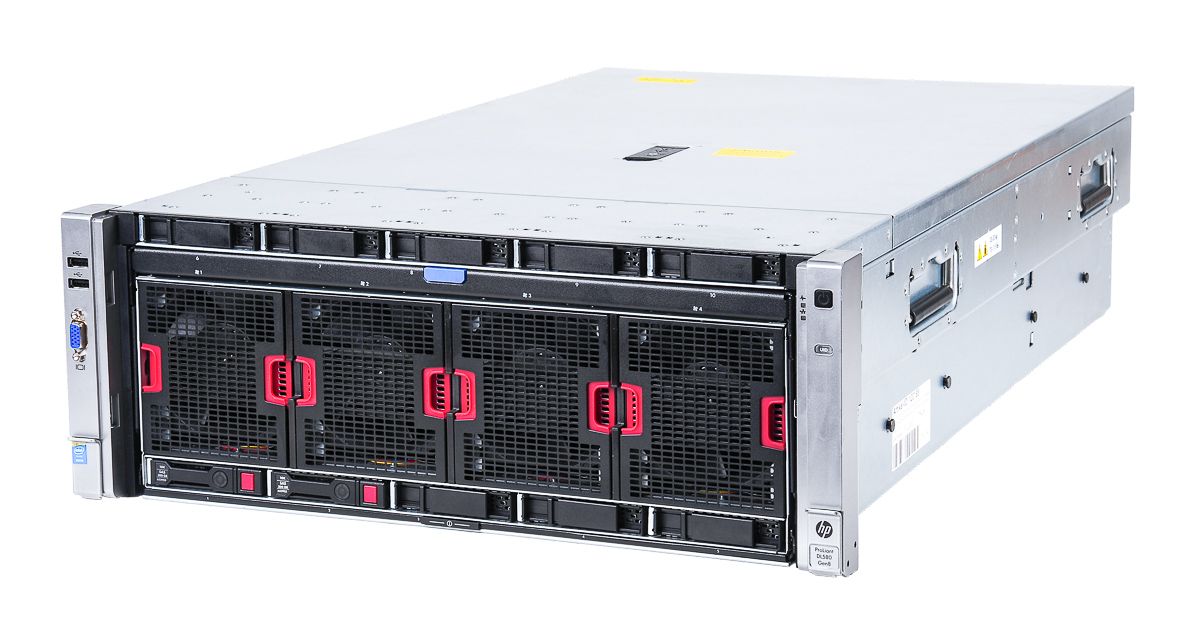
This computer was made for what one could describe as the late big iron era. Applications were scaled up not out. Big databases needed to support online transaction processing tended to run on large single operating system instances with shedloads of CPU and memory.
converged cluster
Part 3 of 5 - follows on from; Part 2 - home computing journey
My desire for our home server / lab, was to have various workloads (apps) NOT bound to specific physical server(s). In essence I wanted for my home the same high-availability that is available to enterprise applications. Maintenance on any one physical server (node) or disk drive to have little effect on the applications running on the cluster.
home computing journey
Part 2 of 5 - follows on from; Part 1 - What is Mini
We all have a slightly different experience with computing. If you were born during the outset of this millennium, you may remember the birth of mobile phones/computing. As a child you may have been fortunate enough to initially experience computing through the family PC. Possibly a laptop, probably a desktop computer.
My father bought one of the first Apple ][+ desktop computers imported into Australia. Number 3 in-fact, which, as a six year old, was a magical piece of kit. Dad programmed BASIC programs (apps), and used the Visicalc spreadsheet program.